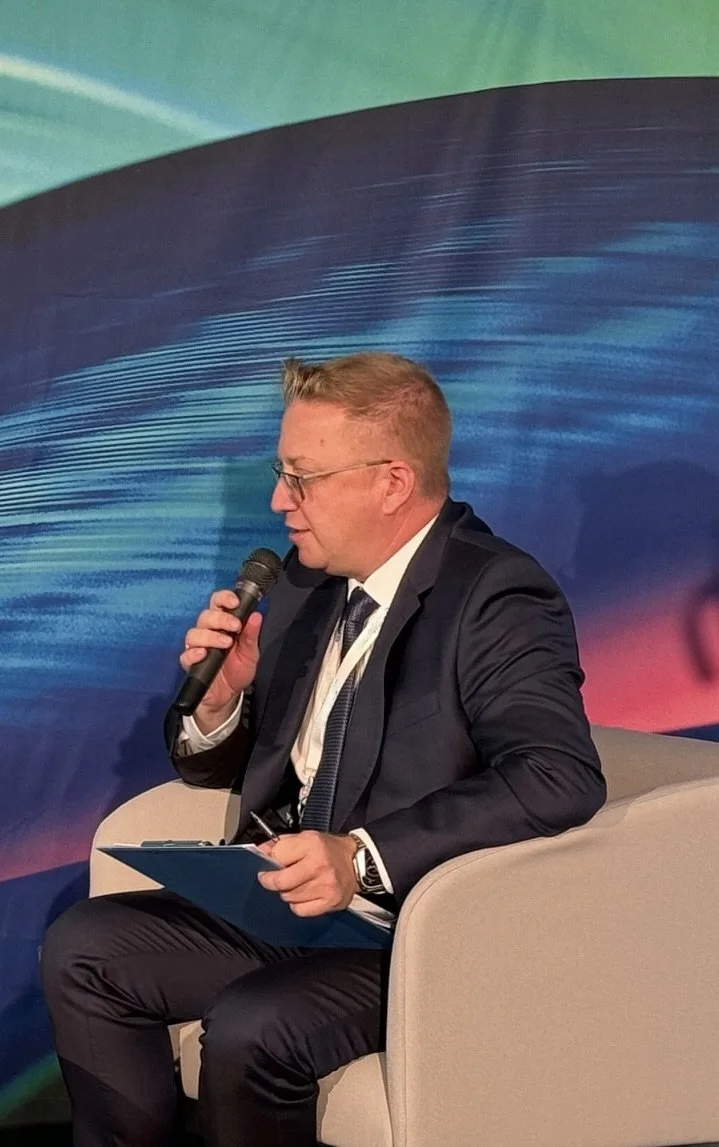
Crafting the approach to solutions at the crossroad of philosophy and leadership.
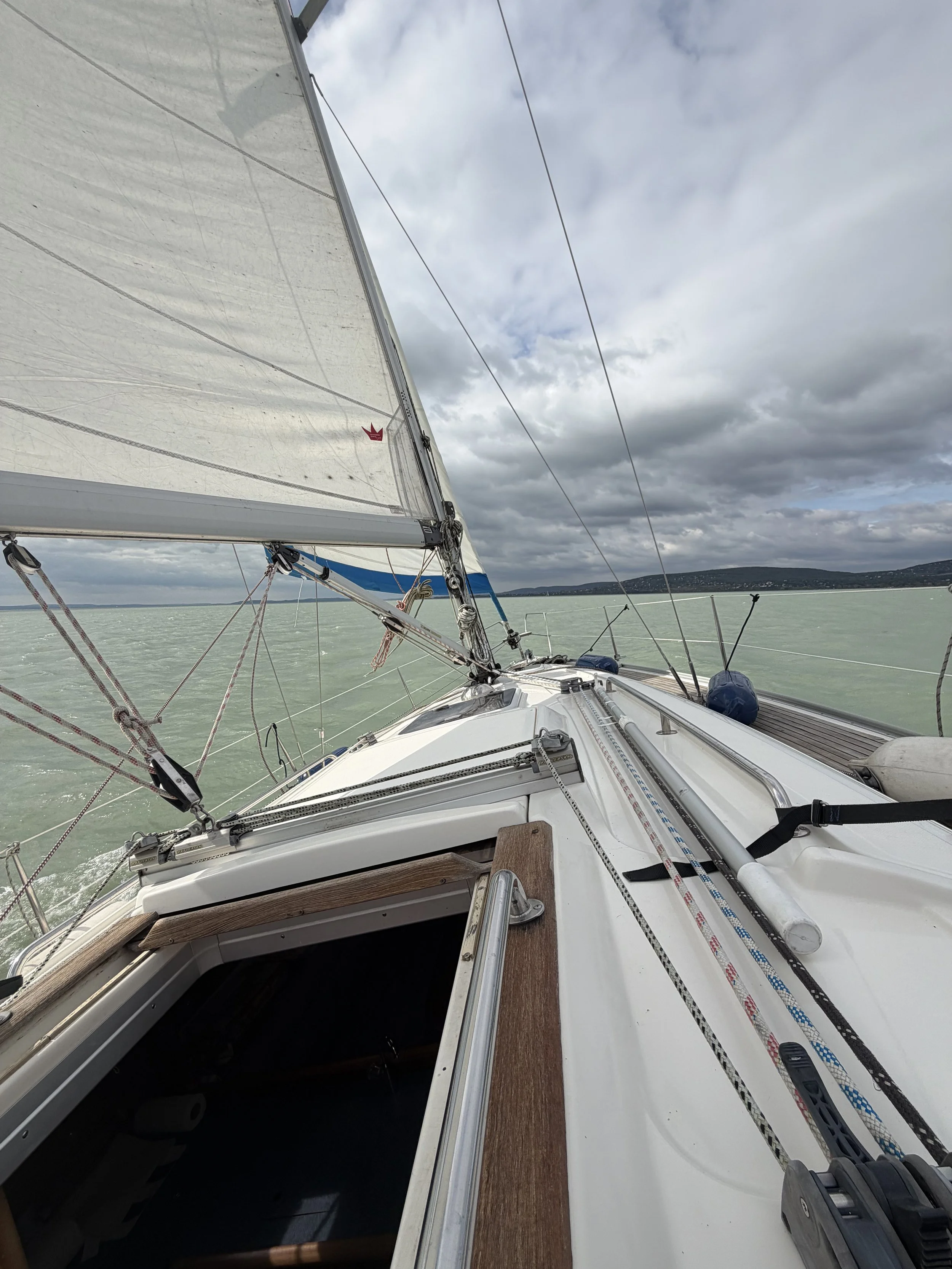
Leadership, philosophy and a sailboat
Dr. Norbert Makk here, the founder of Sophia Ventis. After nearly twenty-five years in leadership and senior-executive roles, I was driven by a strong urge to share this experience, to pass it on — or simply to be of use to others by listening to them with real attention. And something else was at work in me, present all along but resurfacing strongly in the past few years: a respect and deep fascination for philosophy, the kind that once carried me all the way to a PhD. It was profoundly moving to experience how life and work had ripened my original interest, and to watch it begin to take concrete shape.
Sophia Ventis, The Wisdom of the Winds, is more than a pleasant-sounding name. It is the meeting of two worlds within me: philosophy, which was always there in the background, and momentum — the driving force, professional advancement, leadership. And the concrete form in which I live out this meeting is a book. Under the title Sophia VentisI am working on a text in which, across twelve chapters, I examine those ideas of the thinkers most significant to me where I feel a strong connection to the collage of leadership challenges, patterns of behaviour, and team and group dynamics that the past twenty-five years have meant for me.
But Sophia Ventis is not only a business and a book — it is also the name of a sailboat dear to me on Lake Balaton. This is the third component, the one that has utterly captivated me of late. In sailing I see more than a pleasant pastime, a challenge, or simply a sport. The allegory forced the door open with unstoppable power: a six-ton boat seeking to keep its balance, which can — indeed must — be steered through small adjustments and subtle movements; the heading, where even one degree of deviation comes to mean a great deal later on; the alternation of unexpected situations and boundless calm. All of this surfaced in me precisely what, and the way in which, I had come to understand and experience over the past twenty-five years as a leader, and during and before that time as a philosopher.
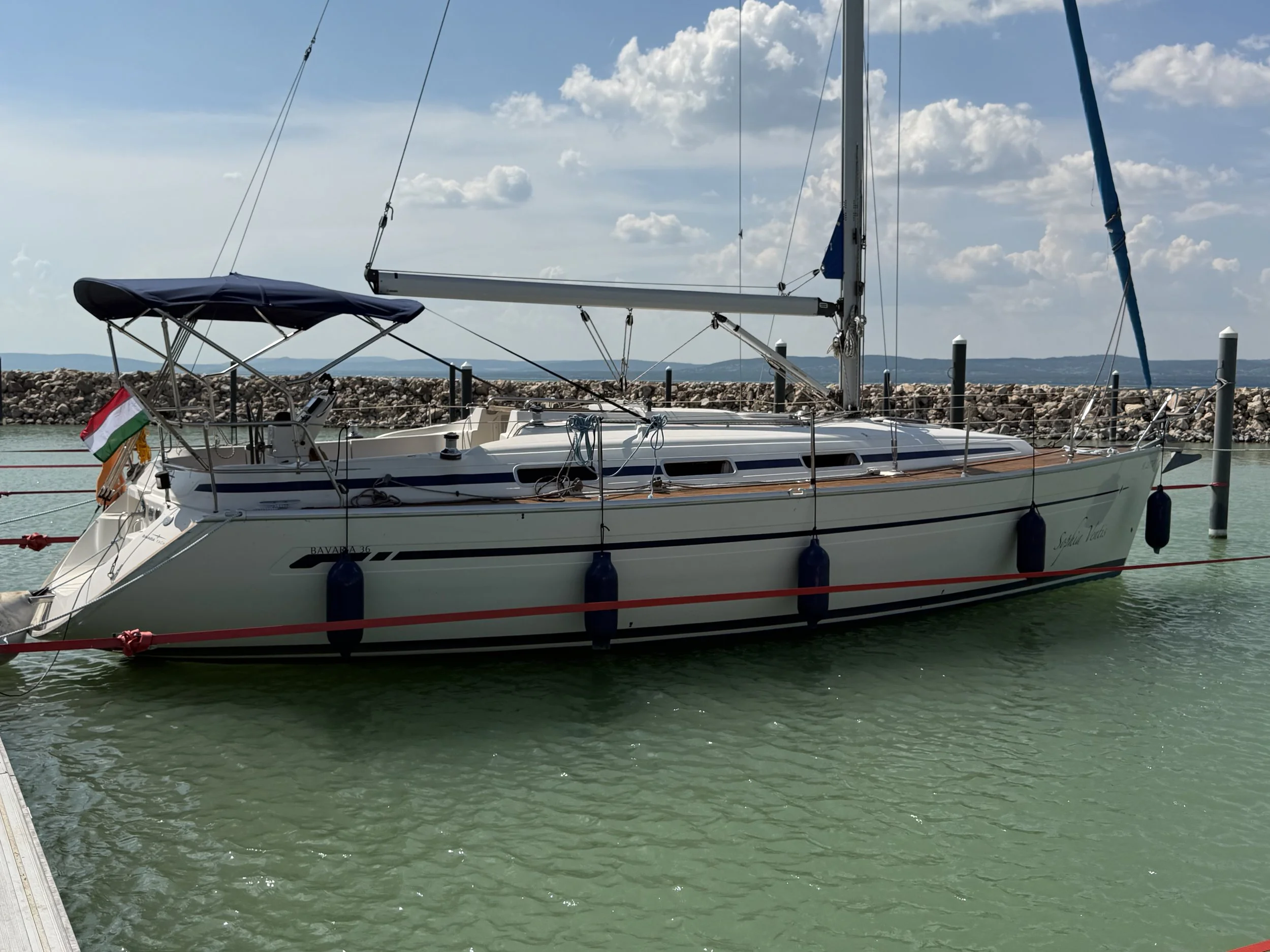
Sailboat Sophia Ventis
A book, a business and a method
These three components, then — the experience of leadership lived out across decades, the return of my philosophical background to the foreground, and the allegory I feel in sailing toward both — spurred me to give this realization an outward form:
— In the form of a book that links philosophy and leadership theory, where the antecedents inspire, or the lessons settle into the everyday life of sailing.
— And in the creation of a business, where I can express all of this, all that I am, in a form that fills me with enthusiasm day after day: in the endless and mutual reflection of coaching, in the joy felt over the usefulness of mentoring, in the distinctive perspective on leadership development that I have come to grasp, and even in the supporting work I can offer, through these principles, for the growth of entire organizations — and not merely in theory, but even in physical form aboard a sailboat, on the deck of Sophia Ventis.
And what runs through the whole of this as a method is the solution focus. As the above began to find its form of expression in me, something started to draw me toward coaching. I feel that chance has the least to do with the fact that I then chose solution-focused coaching. For it went on to enrich me with a very deep realization: in it I found the connection that links one of my most profound philosophical experiences — the infinite reflection of Hegelian metaphysics — with the solution-focused approach. The solution focus builds on what the later Wittgenstein held: that the signifier becomes independent of the signified, in that within language games the meaning of words is determined not by their reference to things but by their use. And this led me back to Hegel. For in Hegel, identity is never simple self-identity. Identity arises in such a way that something differs from itself, and in this differing returns into itself. This is the very movement by which the signifier differs from the signified (difference), yet it is precisely this differing that constitutes the sign as a unity (identity). The sign is not the signifier, not the signified, nor the mere sum of the two — it is the movement in which the signifier signifies through its difference from the signified. The signifier is only what it is by not being what it signifies. Its identity lies in its difference.
Solution-focused coaching likewise makes the solution independent of the problem, because the meaning of the solution does not refer to the problem but resides in the inwardly coherent — immanent — vision of the future that arises in the course of the conversation: just as the sign becomes independent of the signified, so the solution becomes independent of the problem — and in both cases immanent coherence (the language game, and the constructed vision of the future, respectively) takes the place of reference.
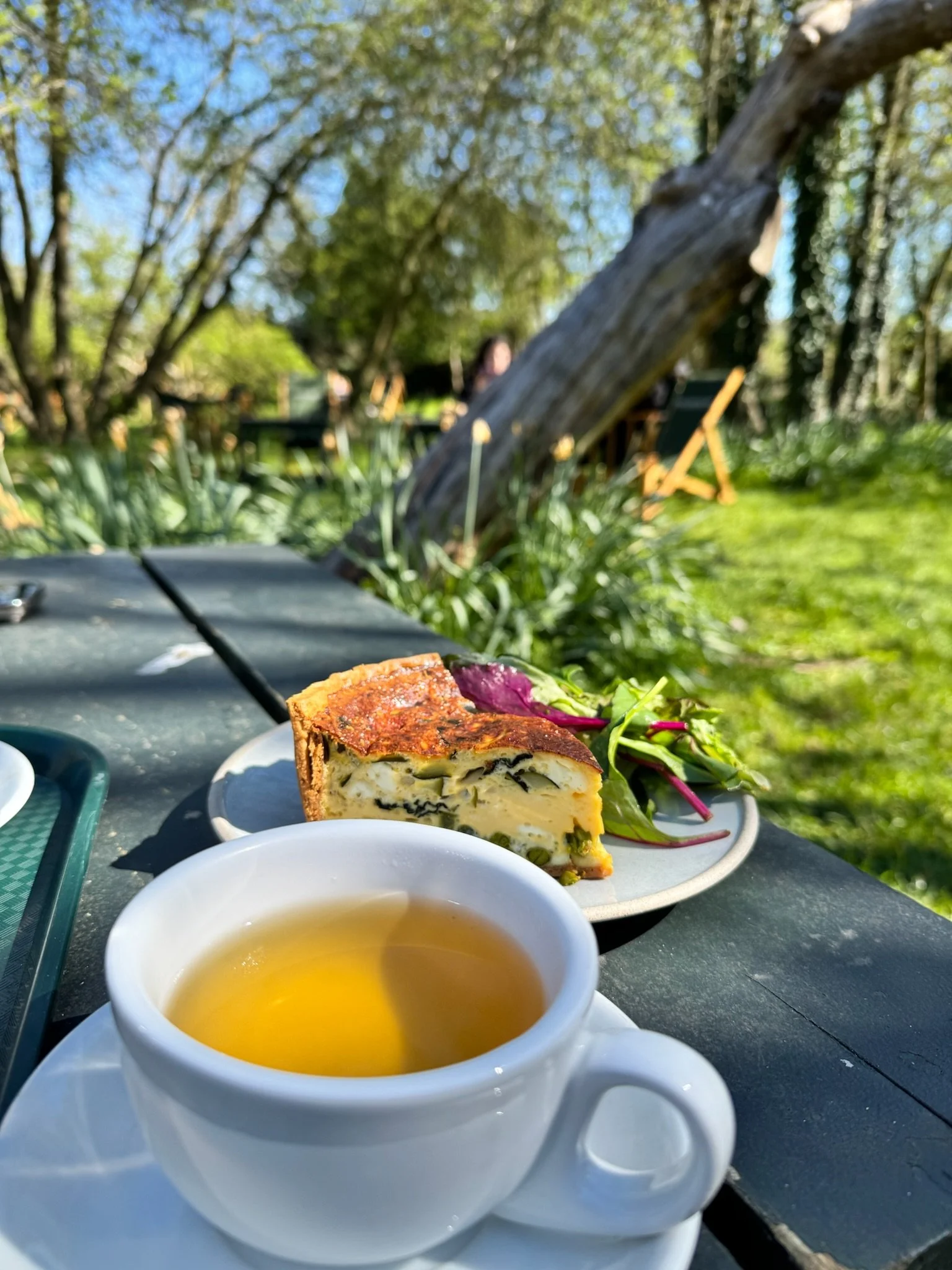
I decided over this cup of tea to start Sophia Ventis at The Orchard in Grantchester — the favorite place of Wittgenstein during his Cambridge years.
Coaching, mentoring, leadership and organizational development
This, then, was the conceptual core that affected me so strongly that I felt I had to go further along this path, to take the step that integrates within me this multitude of influences. It brings decades of senior-executive work into interplay with philosophy, and in the solution focus it hands me a method with which this future can be constructed within the field of force of an allegory as powerful as the one the sailboat called forth in me.
I feel this is not a conclusion. It is rather only a beginning, carried forward by philosophy and momentum — in a word, by Sophia Ventis. It is a moment that fills me with wonder, and with the good hope that I will be of use to many along this way. If you feel like joining me on this path, let this website be the starting point:
— if I can help you in solution-focused self-reflection, I recommend the coaching direction;
— if you long for the concrete passing-on of experience, then mentoring;
— if you would develop your leadership competencies on the basis of philosophical and leadership-theory specifics, then leadership development;
— and if the goal is the solution-focused — and within that, CODE: LOVE–based — development of the working culture of entire teams or organizations, then of course choose organizational development.
I await you with excitement and curiosity, in the firm knowledge that I have good reason to hope this will be a fruitful collaboration for us both.
Let me mention one deeper layer of the solution focus, for which I am very grateful to the team at SolutionSurfers, and especially to Kati Hankovszky and Orsi Szabó. I feel that the consistency with which both of them follow the solution-focused method has created something extraordinarily valuable. Something deeply human. The infinite respect for the other, their acceptance, the treatment of them as the expert, and the recognition of the boundless potential of the human imagination. That in every germinating thought of the other there is the light of heaven, and there is perfection. CODE: LOVE. Peace:
"That nature and the ages join into a whole,
That this abides in place, while those sail far away,
This is perfection, in full heavenly light
Lives every human, as the trees in garlands of bloom."
Hölderlin: The Prospect